We know why we are here. Warsaw.
~Matthew Rozell, a history teacher whose project reunited hundreds of Holocaust survivors with the American soldiers who liberated them, takes a backwards journey to the authentic sites of the Holocaust, retracing the path of the survivors who are now his friends.~
A year ago I took one of the most transformative journeys of my life, with 24 fellow educators, to study the Holocaust and the Jewish resistance to it, in Washington, DC, Germany, the Czech Republic, and Poland. I kept an extensive diary and took tons of photographs. And contrary to many assumptions, it was a journey that led to profound understandings about life, not death. For the next several days, I have decided to go back and retrace my steps and try to process what unfolded for me.
 Wall rebuilt with smashed stones. Warsaw Jewish cemetery.[/caption]
A poignant memorial statue also exists here to Janusz Korczak (1878-1942), who was murdered at Treblinka with 200 of his orphaned charges, accompanying them to the gas chambers.
Wall rebuilt with smashed stones. Warsaw Jewish cemetery.[/caption]
A poignant memorial statue also exists here to Janusz Korczak (1878-1942), who was murdered at Treblinka with 200 of his orphaned charges, accompanying them to the gas chambers.

 There is so much more to learn here. In the evening we dress for a Chopin recital.
 The dichotomy is striking. Horrible places by day. Evening debriefing and intense discussions over dinner, palatial accommodations by night. The concert is in a former palace.
 I'd say we deserve it.
 The Umschlagplatz. As many as 10,000 Jews were deported on some days to Treblinka. Upwards of 300,000 were sent from here to their deaths.[/caption]
[caption id="attachment_3569" align="aligncenter" width="500"]
The Umschlagplatz. As many as 10,000 Jews were deported on some days to Treblinka. Upwards of 300,000 were sent from here to their deaths.[/caption]
[caption id="attachment_3569" align="aligncenter" width="500"] The Umschlagplatz. Our group. 2013.[/caption]
 [caption id="attachment_3571" align="aligncenter" width="500"]
 The Umschlagplatz. As many as 10,000 Jews were deported on some days to Treblinka. Upwards of 300,000 were sent from here to their deaths.[/caption]
We walk the edge of the wall, memorialized in bronze in the sidewalk.
The Umschlagplatz. As many as 10,000 Jews were deported on some days to Treblinka. Upwards of 300,000 were sent from here to their deaths.[/caption]
We walk the edge of the wall, memorialized in bronze in the sidewalk.

 And we come to a section that still stands.
[caption id="attachment_3575" align="aligncenter" width="500"]
And we come to a section that still stands.
[caption id="attachment_3575" align="aligncenter" width="500"] Warsaw Ghetto wall.[/caption]
[caption id="attachment_3574" align="aligncenter" width="500"]
Warsaw Ghetto wall.[/caption]
[caption id="attachment_3574" align="aligncenter" width="500"] Warsaw Ghetto wall. Some Israeli teens are here, listening to their teacher.[/caption]
The Warsaw Ghetto uprising was the first open fight in an occupied city against the Germans. And it was conducted by Jewish youth, who held off the Germans for half a month in the spring of 1943. Utterly inspiring and amazing. We make our way to Mila 18, the bunker command post where Mordechai Anielewicz and many of the resistance fighters breathed their last. It is another solemn moment.
[caption id="attachment_3576" align="aligncenter" width="500"]
Warsaw Ghetto wall. Some Israeli teens are here, listening to their teacher.[/caption]
The Warsaw Ghetto uprising was the first open fight in an occupied city against the Germans. And it was conducted by Jewish youth, who held off the Germans for half a month in the spring of 1943. Utterly inspiring and amazing. We make our way to Mila 18, the bunker command post where Mordechai Anielewicz and many of the resistance fighters breathed their last. It is another solemn moment.
[caption id="attachment_3576" align="aligncenter" width="500"] 18 Mila Street.[/caption]
[caption id="attachment_3567" align="aligncenter" width="500"]
18 Mila Street.[/caption]
[caption id="attachment_3567" align="aligncenter" width="500"] Monument at Mila 18.[/caption]
We know why we are here. We are not only witnesses, but we were chosen to become, for many, the point of entry on the immense and sometimes unfathomable subject of the Holocaust, and the many forms of resistance that were taken during it. And so rightly, our trip is concluding here. The processing will only come over time.
Monument at Mila 18.[/caption]
We know why we are here. We are not only witnesses, but we were chosen to become, for many, the point of entry on the immense and sometimes unfathomable subject of the Holocaust, and the many forms of resistance that were taken during it. And so rightly, our trip is concluding here. The processing will only come over time.
****************************
July 16. I wrote in my journal on the bus ride back from Treblinka. The handwriting is nearly illegible due to the poor roads, underscoring the remoteness of this place where 900,000 plus were murdered. In the afternoon we headed to the Jewish cemetery in Warsaw. As in many occupied areas the cemetery also contains a mass grave. [caption id="attachment_3558" align="aligncenter" width="500"]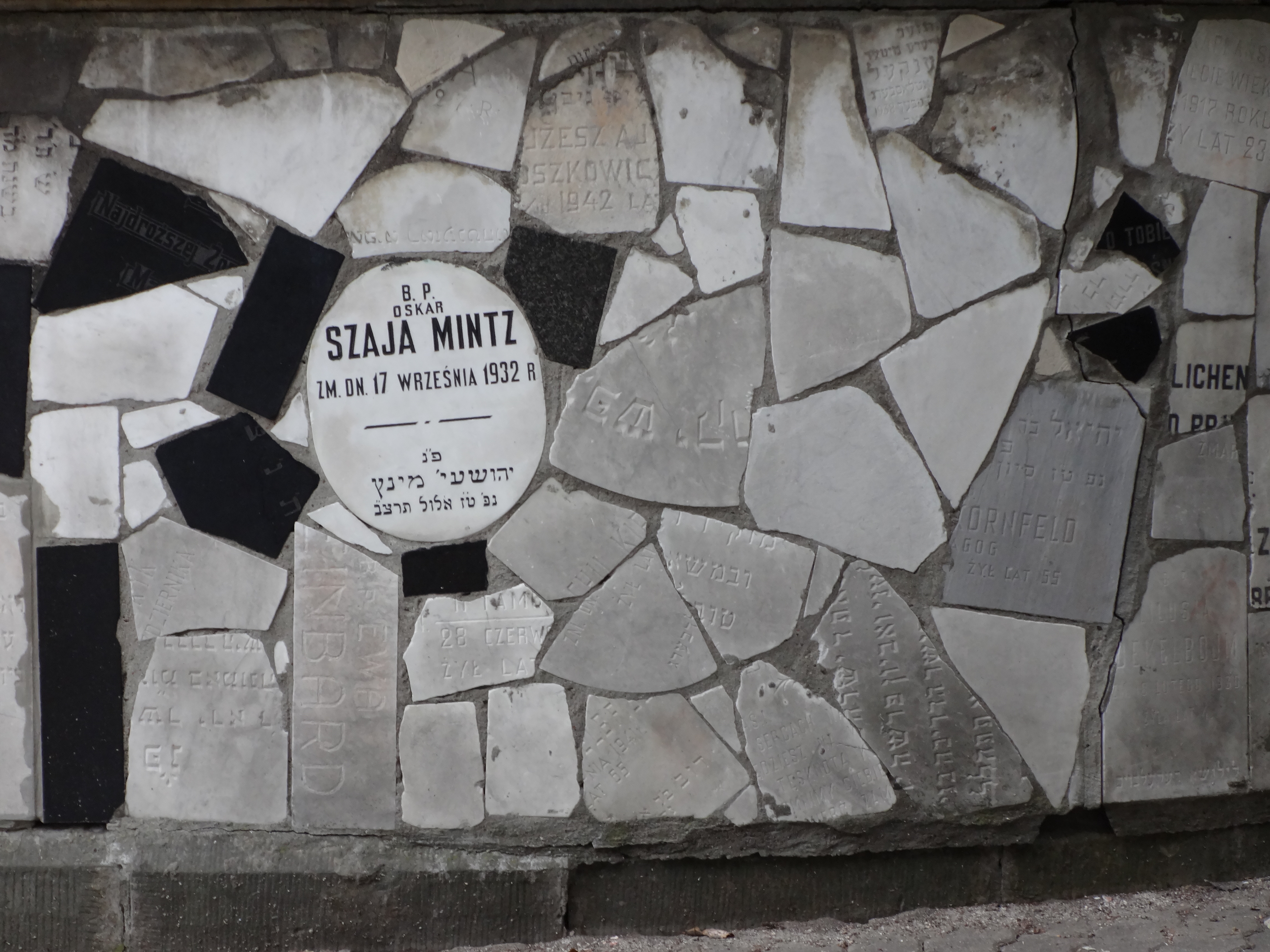 Wall rebuilt with smashed stones. Warsaw Jewish cemetery.[/caption]
A poignant memorial statue also exists here to Janusz Korczak (1878-1942), who was murdered at Treblinka with 200 of his orphaned charges, accompanying them to the gas chambers.
Wall rebuilt with smashed stones. Warsaw Jewish cemetery.[/caption]
A poignant memorial statue also exists here to Janusz Korczak (1878-1942), who was murdered at Treblinka with 200 of his orphaned charges, accompanying them to the gas chambers.
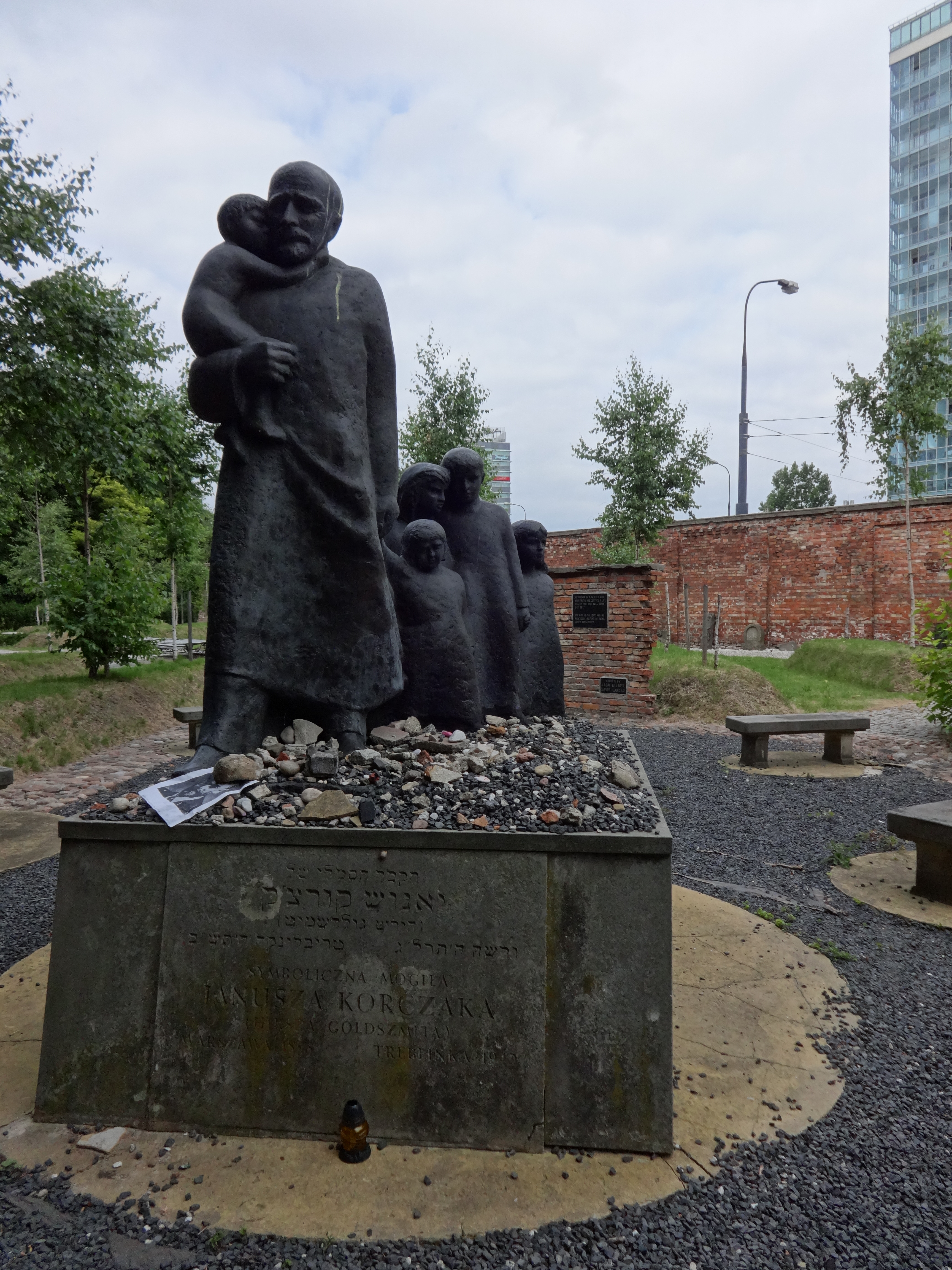
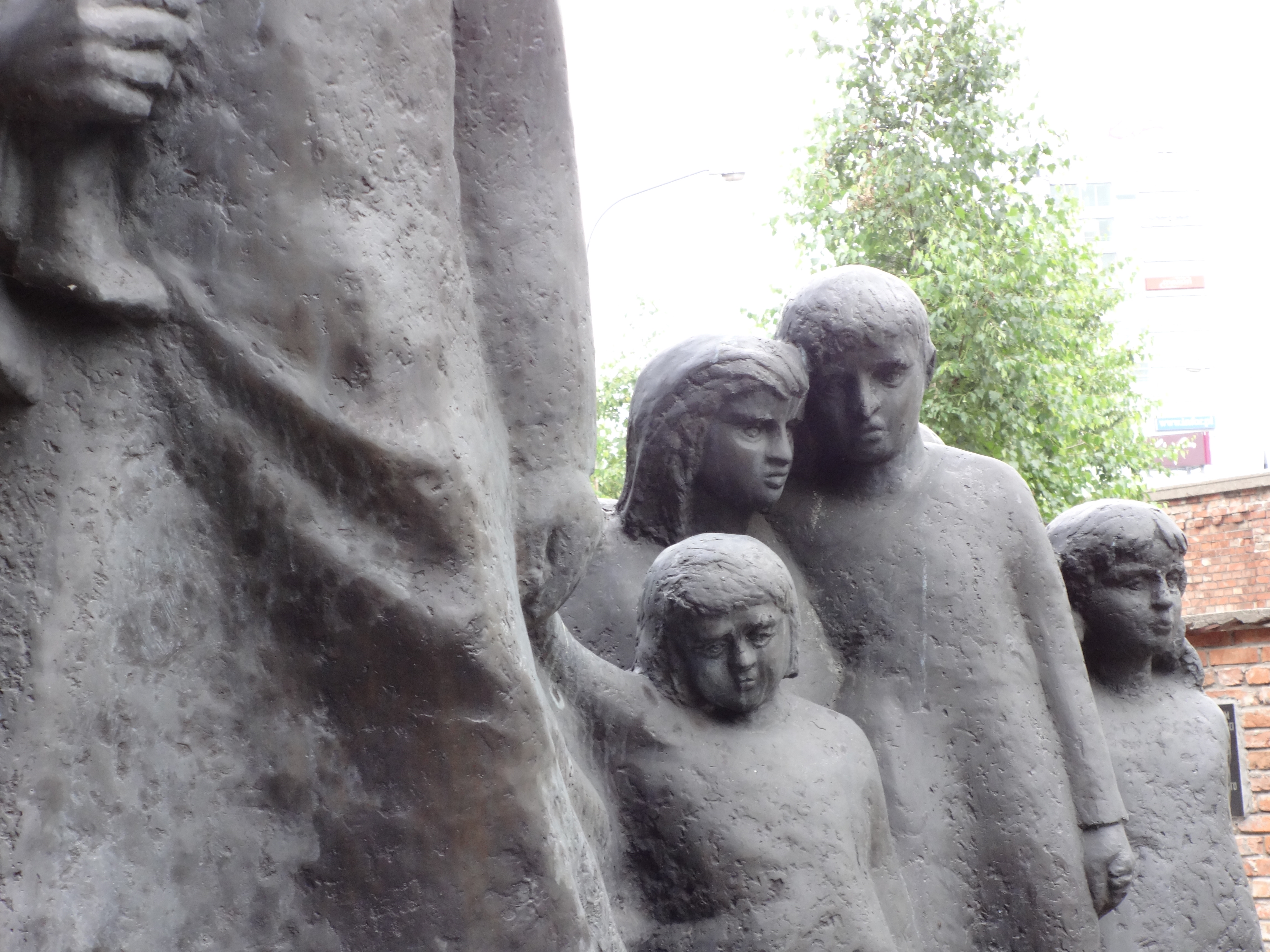 There is so much more to learn here. In the evening we dress for a Chopin recital.
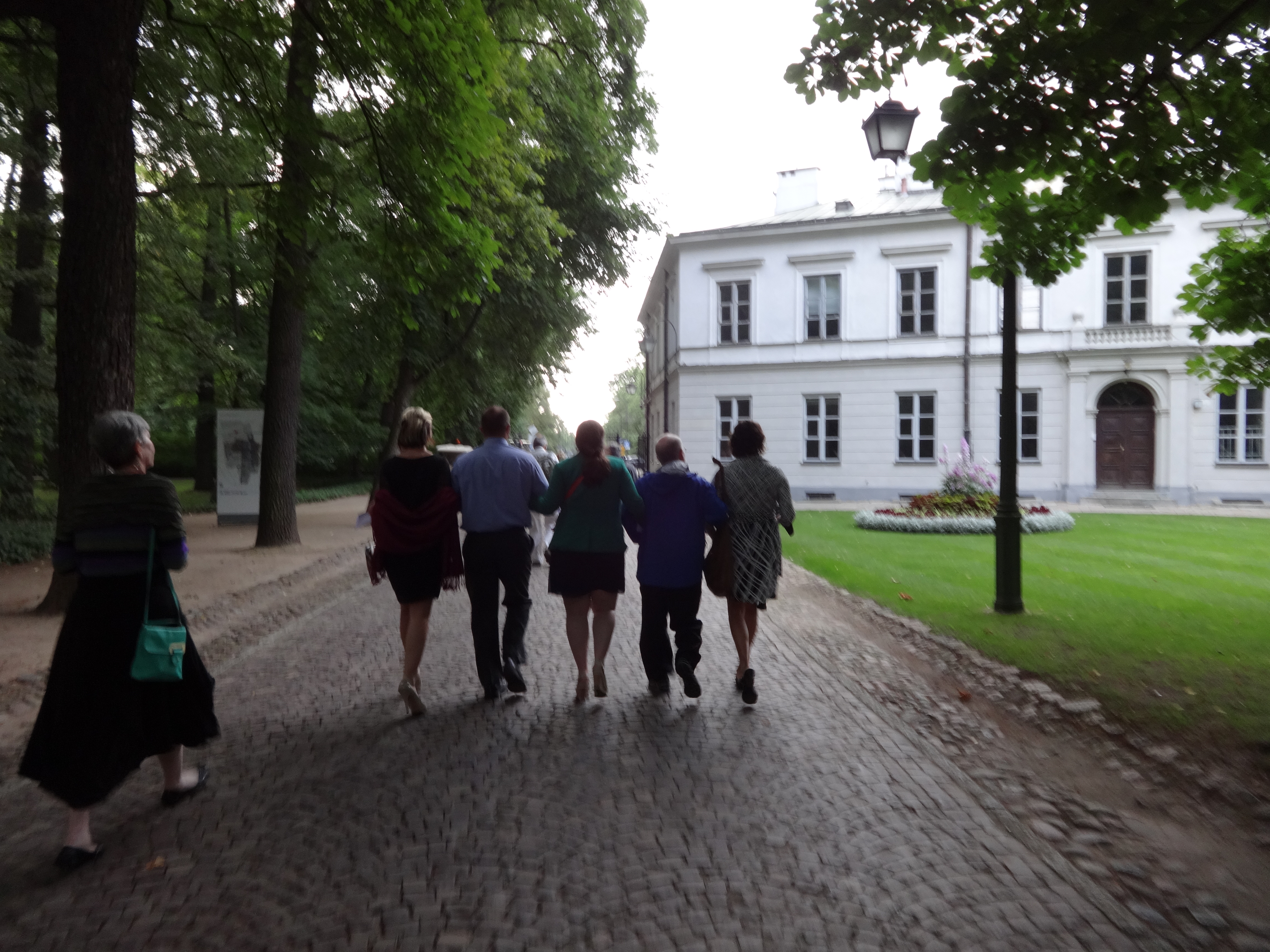 The dichotomy is striking. Horrible places by day. Evening debriefing and intense discussions over dinner, palatial accommodations by night. The concert is in a former palace.
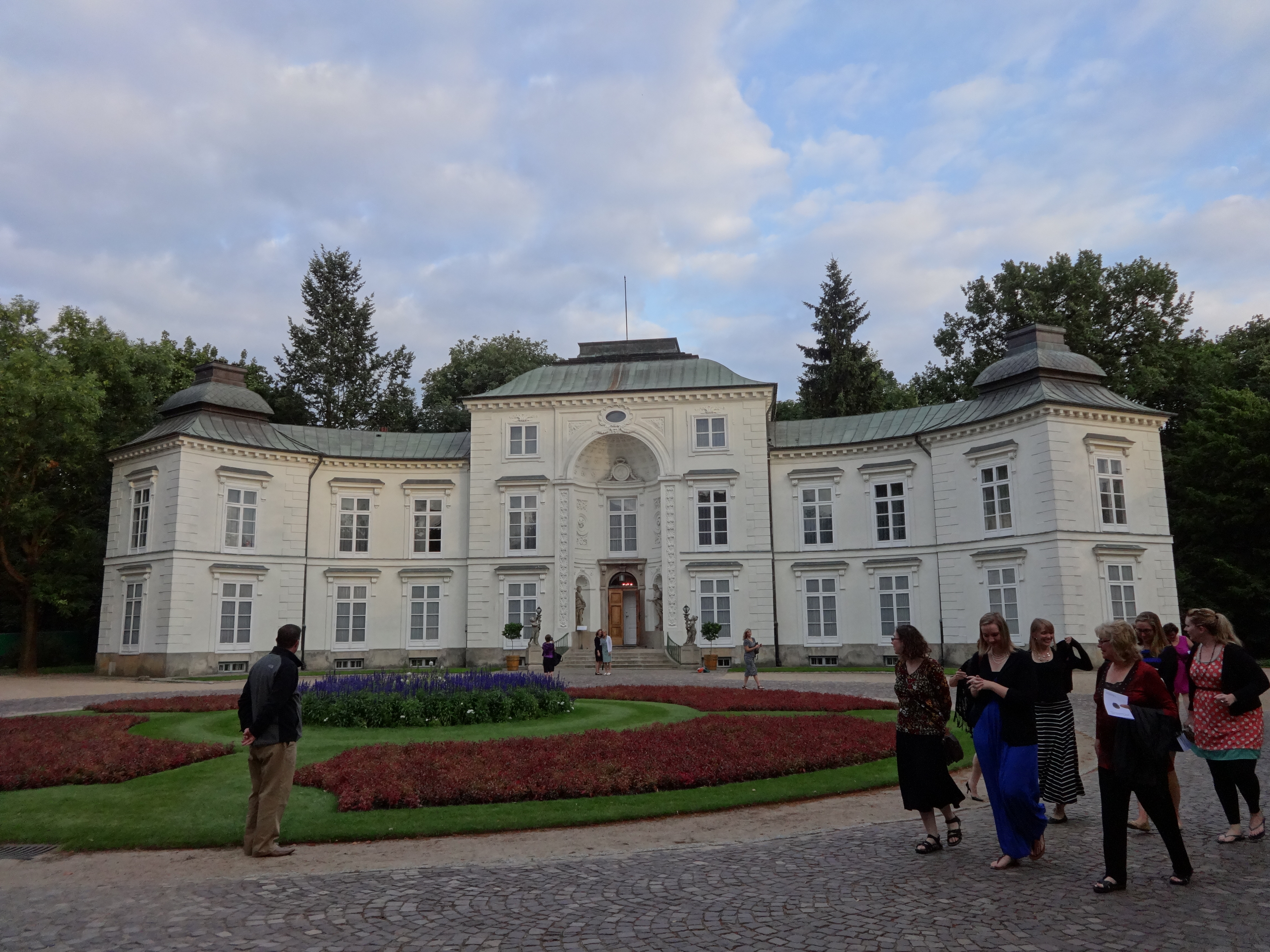 I'd say we deserve it.
******************************************
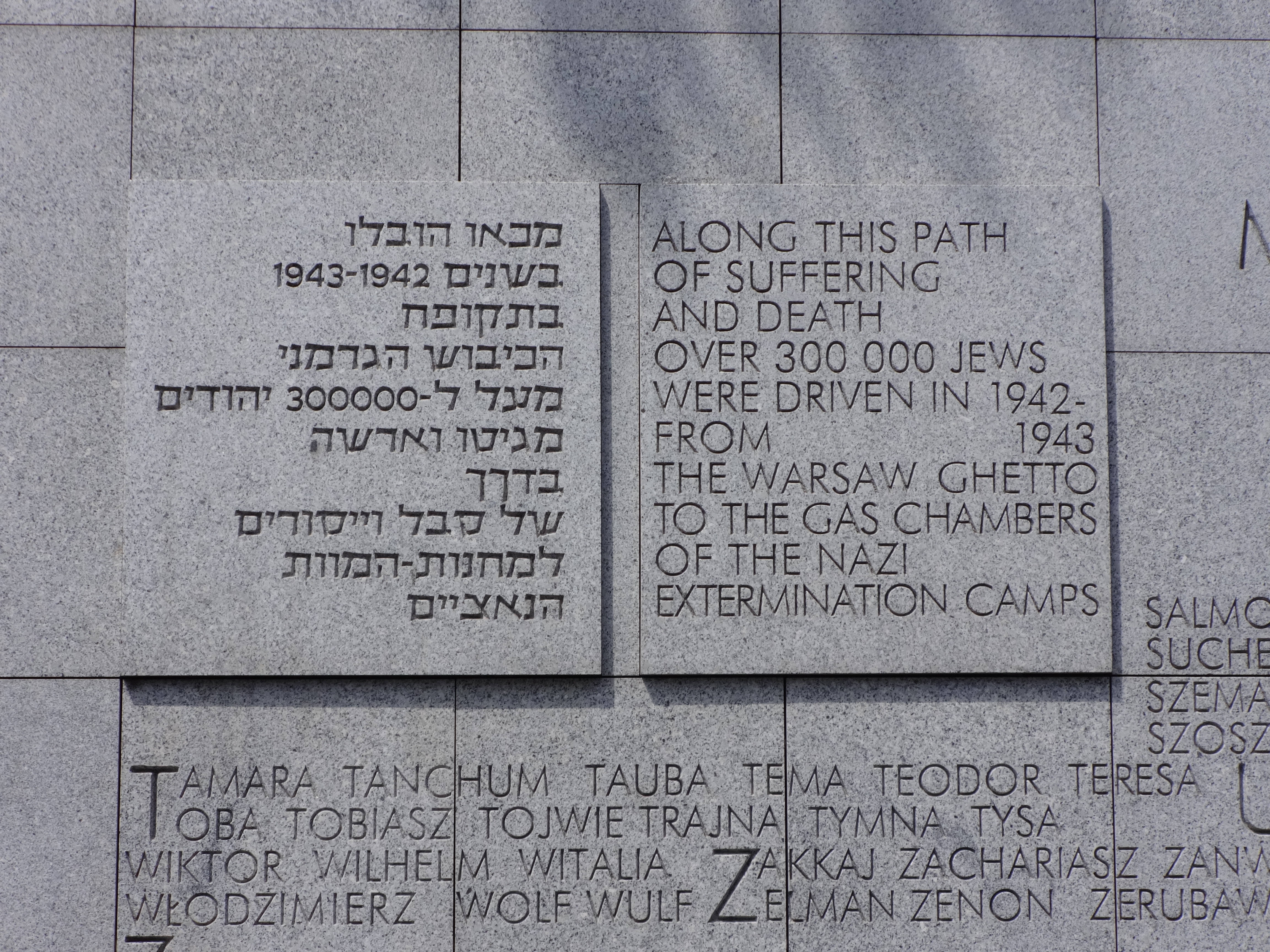
July 17. We tour Jewish Warsaw and finally the remnants of the ghetto wall, and also the Umschlagplatz. It is here that forced gatherings for the mass deportations to Treblinka took place. I am also reminded of the scene from the film "The Pianist". [caption id="" align="alignnone" width="751"] The Umschlagplatz. As many as 10,000 Jews were deported on some days to Treblinka. Upwards of 300,000 were sent from here to their deaths.[/caption]
[caption id="attachment_3569" align="aligncenter" width="500"]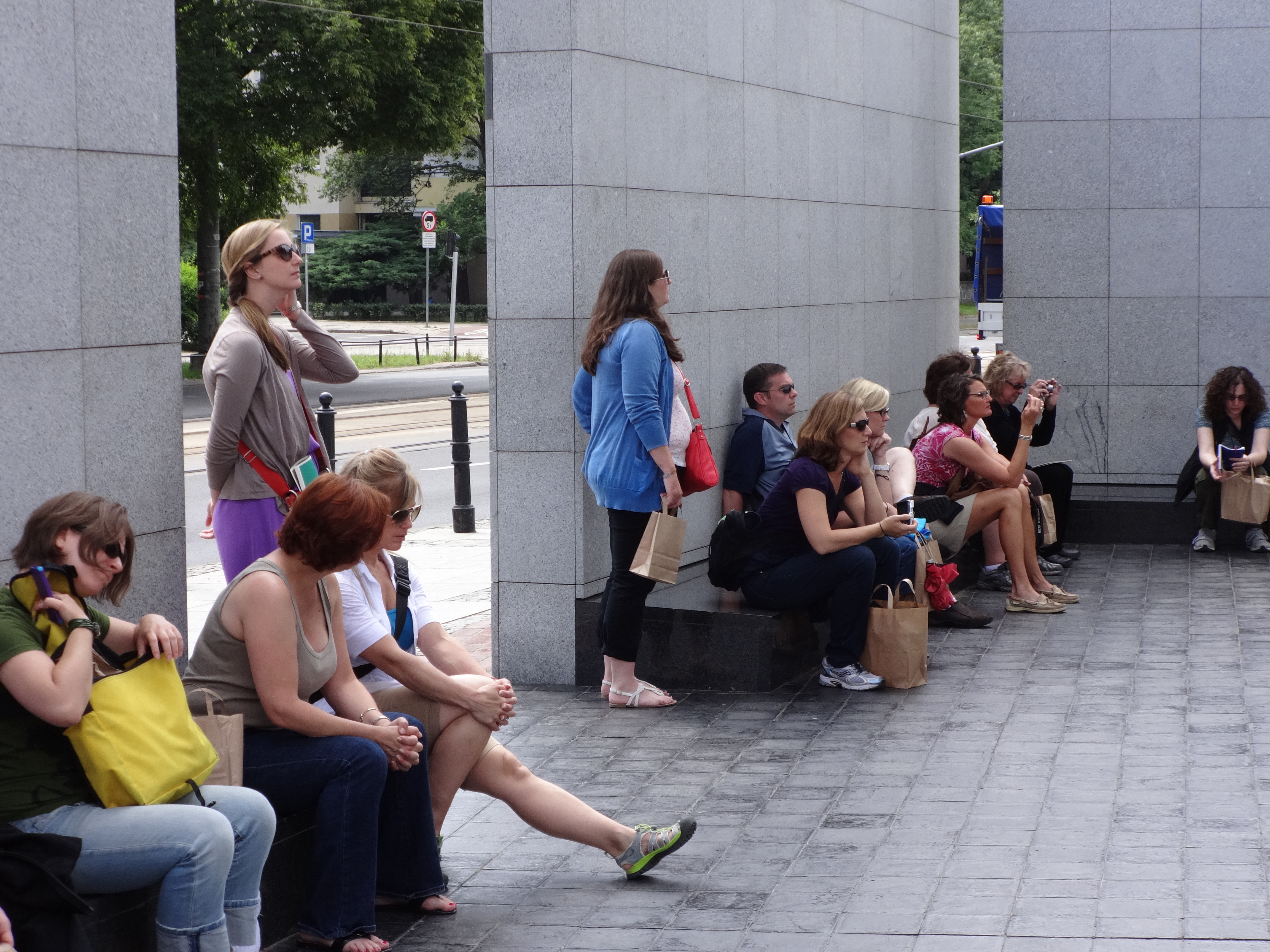 The Umschlagplatz. Our group. 2013.[/caption]
 [caption id="attachment_3571" align="aligncenter" width="500"]
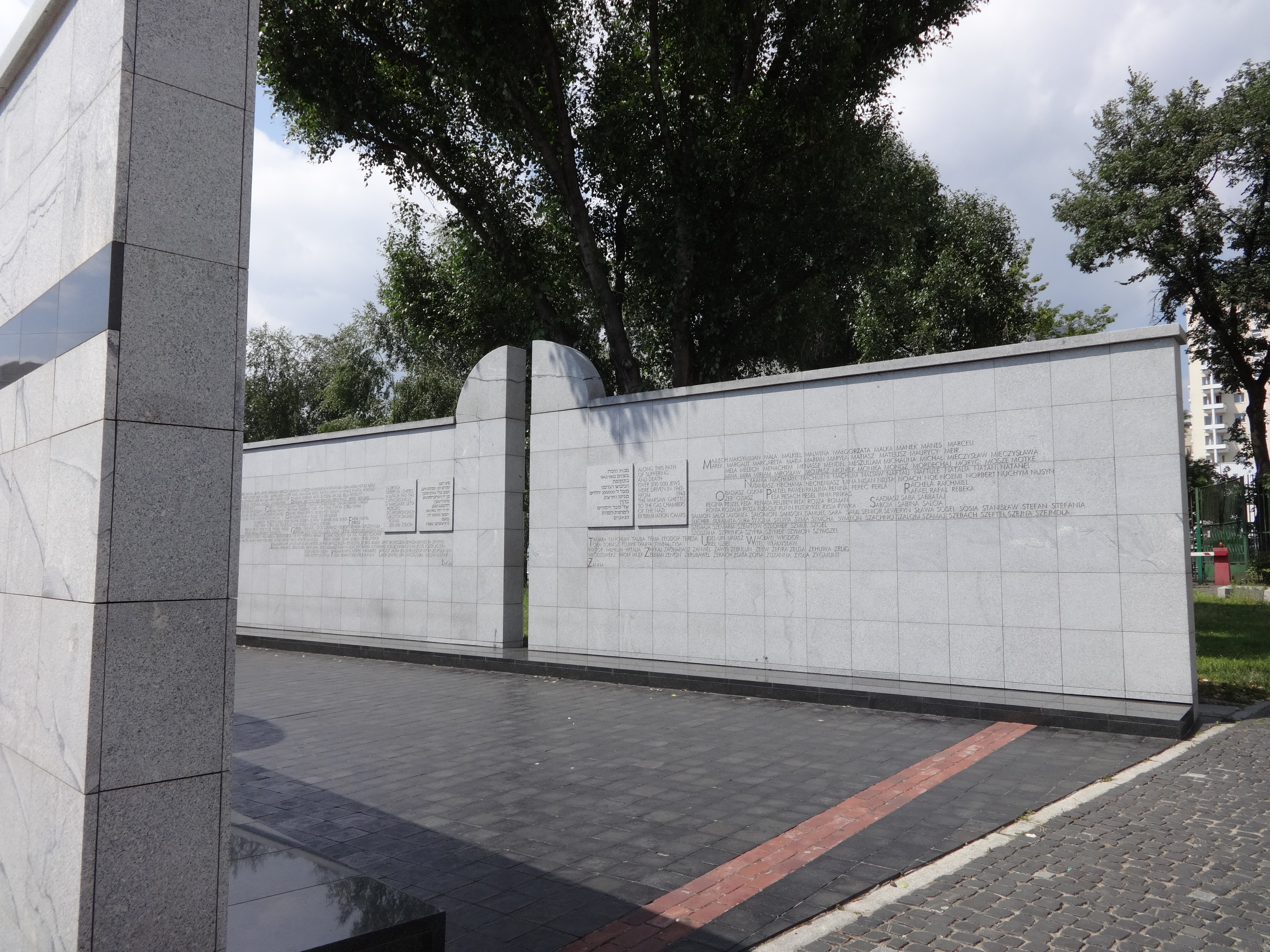 The Umschlagplatz. As many as 10,000 Jews were deported on some days to Treblinka. Upwards of 300,000 were sent from here to their deaths.[/caption]
We walk the edge of the wall, memorialized in bronze in the sidewalk.
The Umschlagplatz. As many as 10,000 Jews were deported on some days to Treblinka. Upwards of 300,000 were sent from here to their deaths.[/caption]
We walk the edge of the wall, memorialized in bronze in the sidewalk.
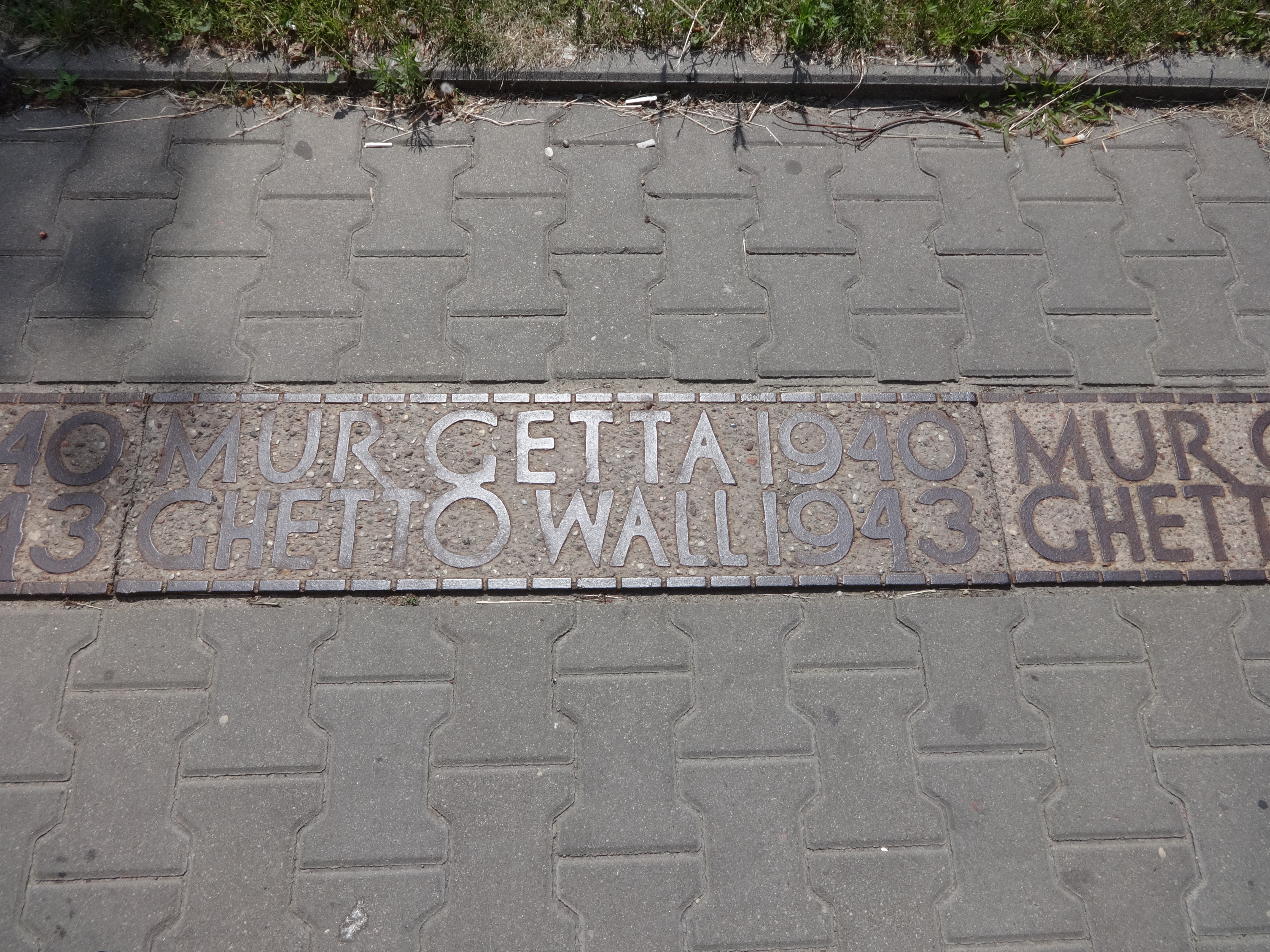
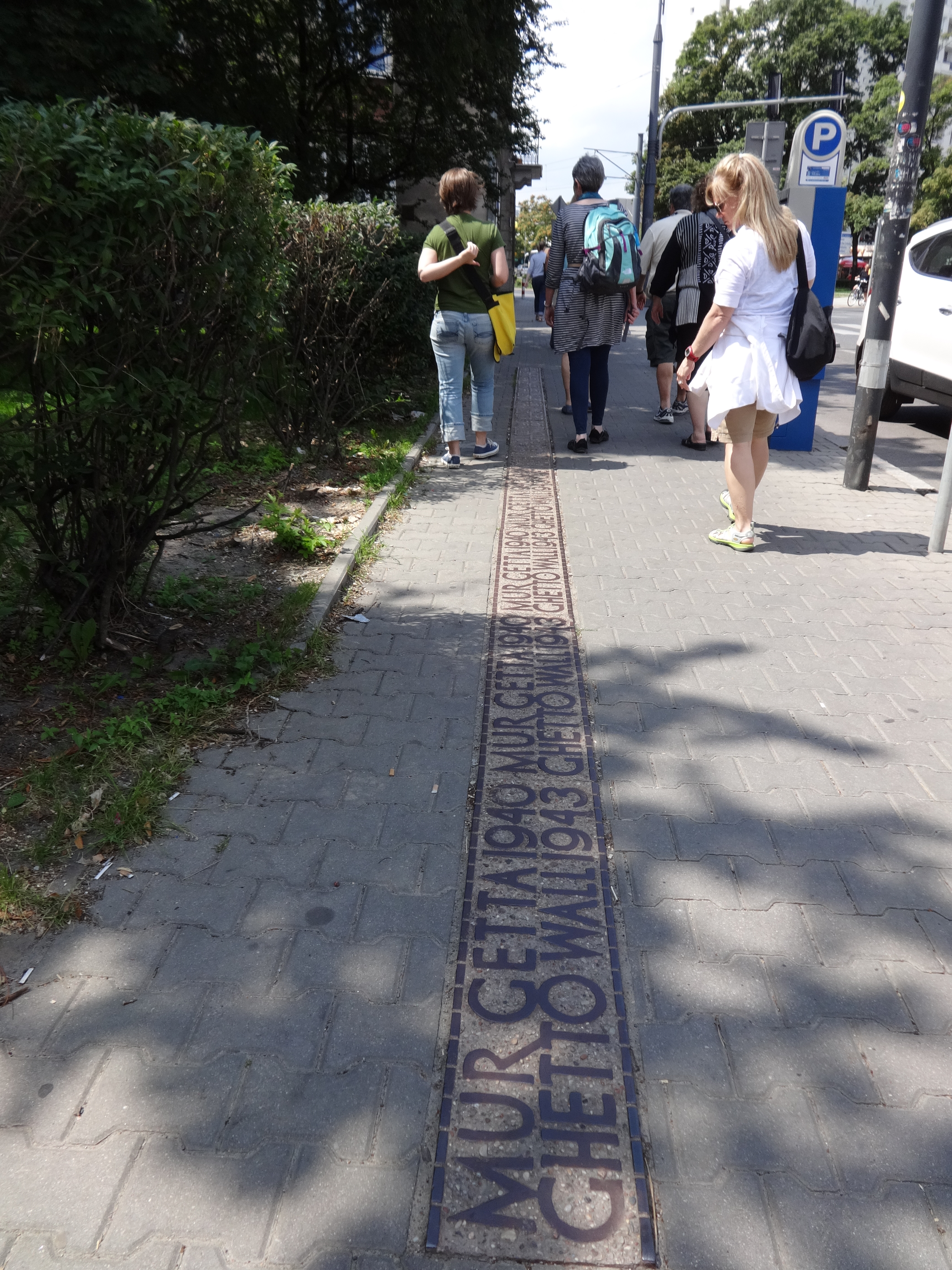 And we come to a section that still stands.
[caption id="attachment_3575" align="aligncenter" width="500"]
And we come to a section that still stands.
[caption id="attachment_3575" align="aligncenter" width="500"]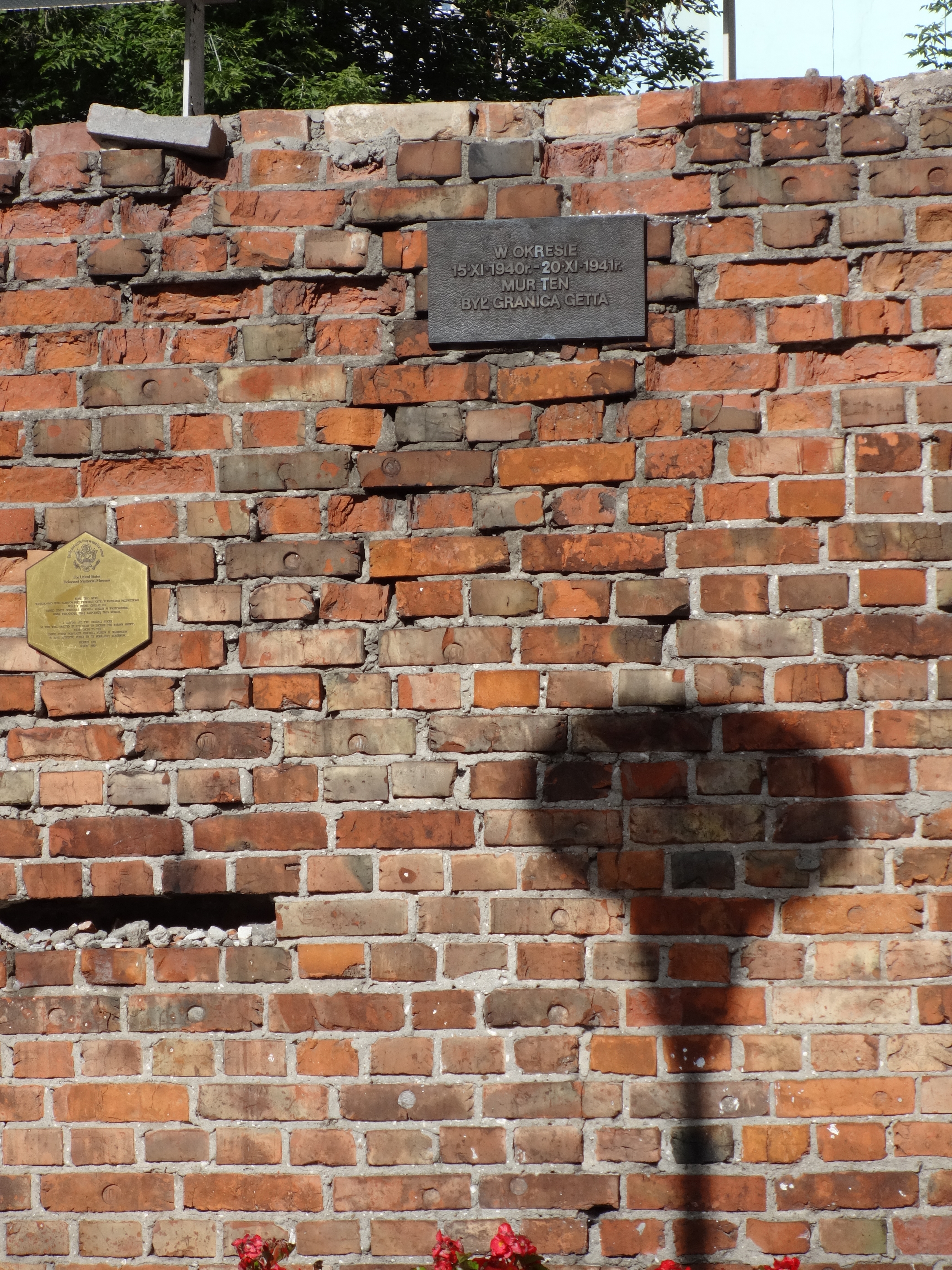 Warsaw Ghetto wall.[/caption]
[caption id="attachment_3574" align="aligncenter" width="500"]
Warsaw Ghetto wall.[/caption]
[caption id="attachment_3574" align="aligncenter" width="500"]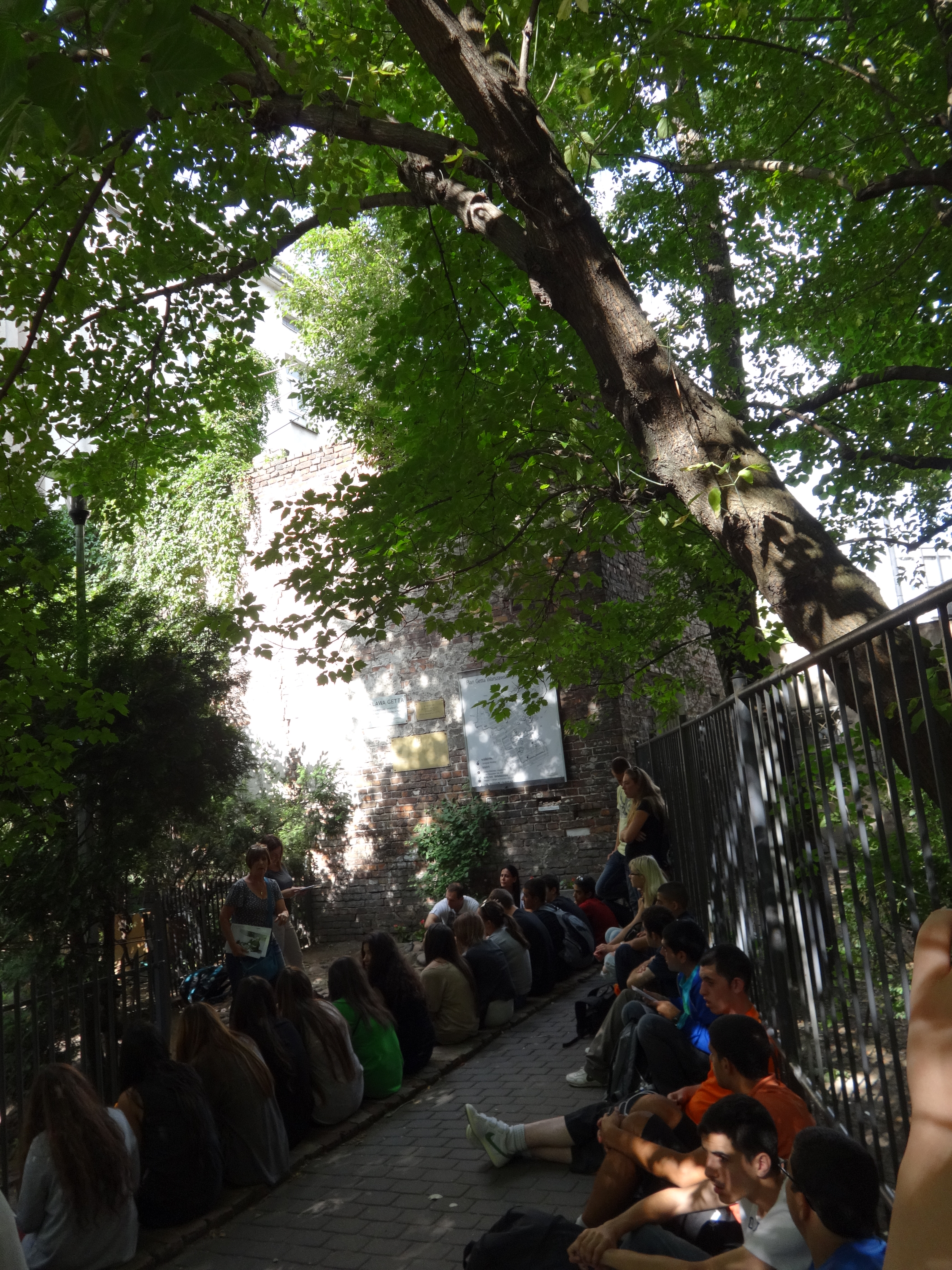 Warsaw Ghetto wall. Some Israeli teens are here, listening to their teacher.[/caption]
The Warsaw Ghetto uprising was the first open fight in an occupied city against the Germans. And it was conducted by Jewish youth, who held off the Germans for half a month in the spring of 1943. Utterly inspiring and amazing. We make our way to Mila 18, the bunker command post where Mordechai Anielewicz and many of the resistance fighters breathed their last. It is another solemn moment.
[caption id="attachment_3576" align="aligncenter" width="500"]
Warsaw Ghetto wall. Some Israeli teens are here, listening to their teacher.[/caption]
The Warsaw Ghetto uprising was the first open fight in an occupied city against the Germans. And it was conducted by Jewish youth, who held off the Germans for half a month in the spring of 1943. Utterly inspiring and amazing. We make our way to Mila 18, the bunker command post where Mordechai Anielewicz and many of the resistance fighters breathed their last. It is another solemn moment.
[caption id="attachment_3576" align="aligncenter" width="500"]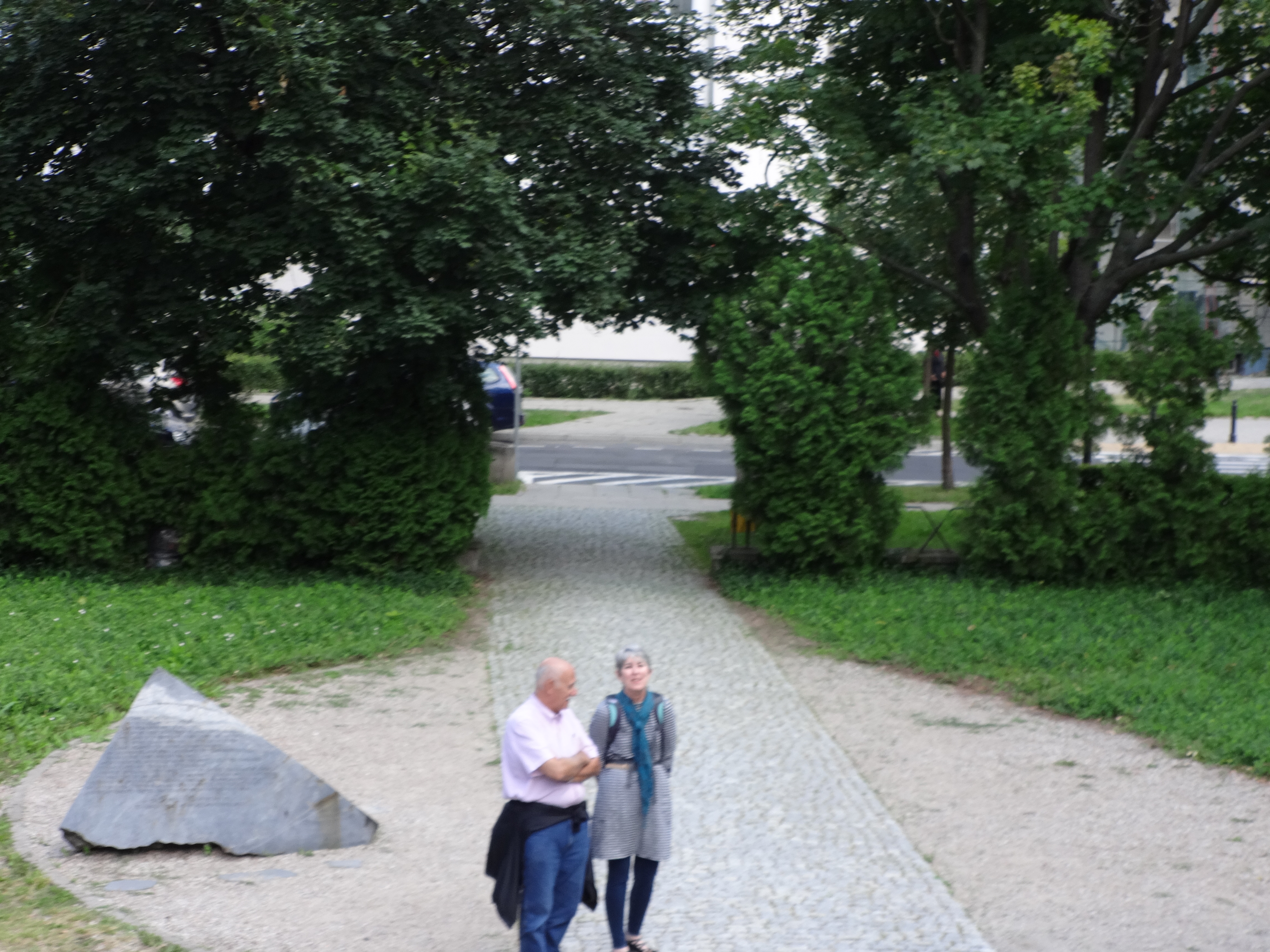 18 Mila Street.[/caption]
[caption id="attachment_3567" align="aligncenter" width="500"]
18 Mila Street.[/caption]
[caption id="attachment_3567" align="aligncenter" width="500"]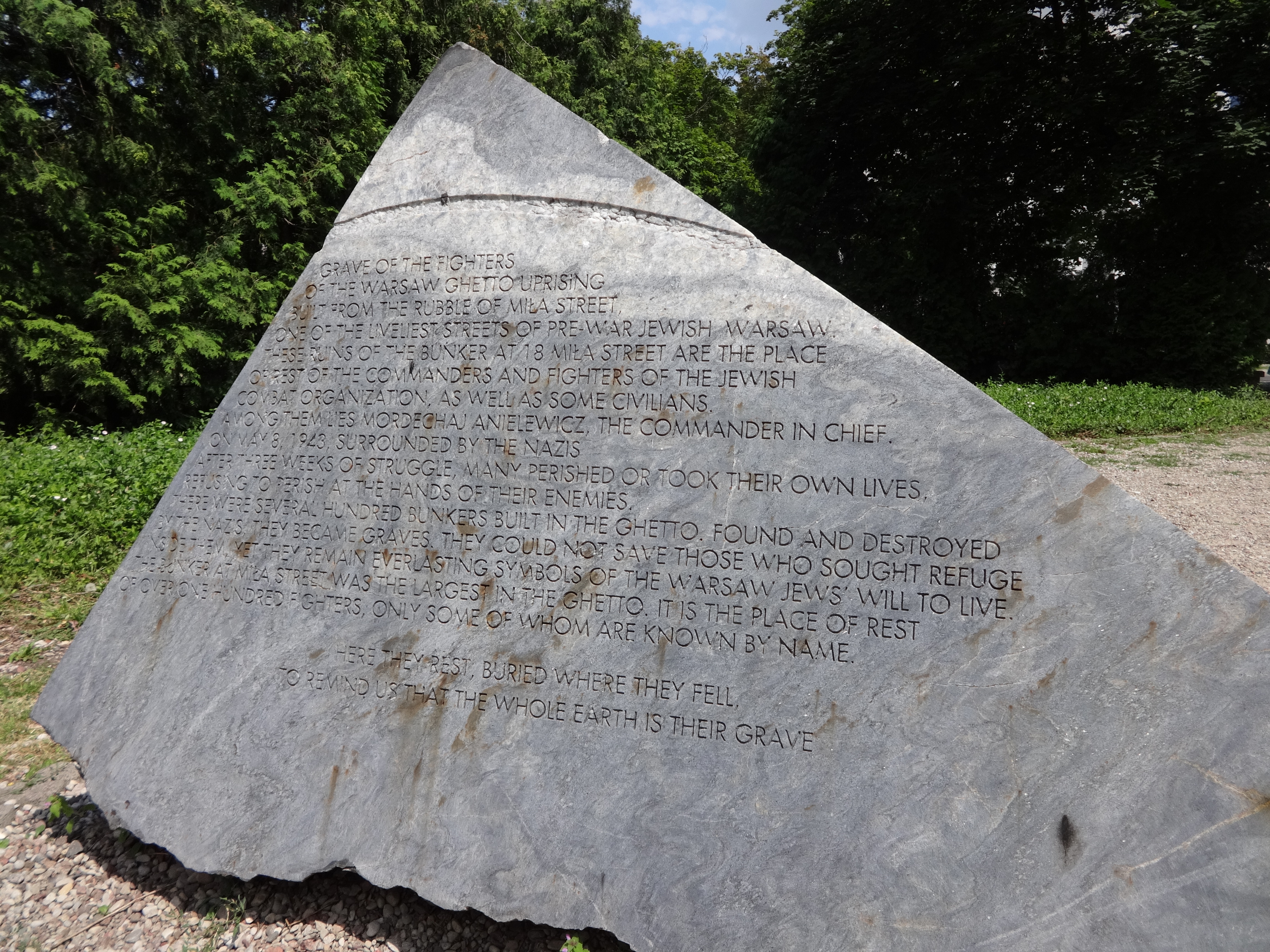 Monument at Mila 18.[/caption]
We know why we are here. We are not only witnesses, but we were chosen to become, for many, the point of entry on the immense and sometimes unfathomable subject of the Holocaust, and the many forms of resistance that were taken during it. And so rightly, our trip is concluding here. The processing will only come over time.
Monument at Mila 18.[/caption]
We know why we are here. We are not only witnesses, but we were chosen to become, for many, the point of entry on the immense and sometimes unfathomable subject of the Holocaust, and the many forms of resistance that were taken during it. And so rightly, our trip is concluding here. The processing will only come over time.


